About Me
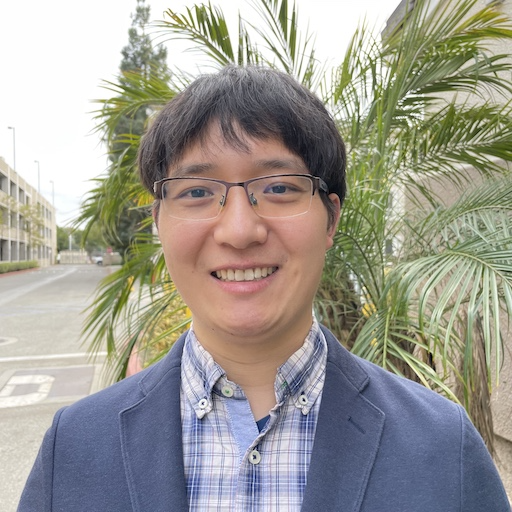
I’m Chaojie Zhang (张超杰), a plasma/accelerator physicist at UCLA. My research aims to transform plasma wakefield acceleration from proof-of-principle demonstrations into robust, reliable technology for next-generation particle colliders and compact light sources. I achieve this by integrating high-impact experiments, large-scale simulations, and AI/ML-driven modeling to resolve key physics bottlenecks.
I was born and grew up in Xinzheng (新郑), the legendary birthplace of Huangdi, the Yellow Emperor (the mythical ancestor of Chinese civilization). This culturally rich environment fostered my deep appreciation for humanity’s quest for understanding—a spirit that drives my scientific pursuits. I pursued my undergraduate and doctoral studies in Engineering Physics at Tsinghua University, where I pioneered femtosecond relativistic electron probing (FREP), producing the first direct images of plasma wakefields and earning the John Dawson Thesis Prize. After completing my Ph.D. in 2016, I joined UCLA as a postdoctoral researcher and have since led multiple landmark experiments at world-class facilities including SLAC’s FACET-II and Brookhaven’s Accelerator Test Facility.
Check out my CV and publications to learn more about my work!
Research Highlights
Plasma Wakefield Transformer
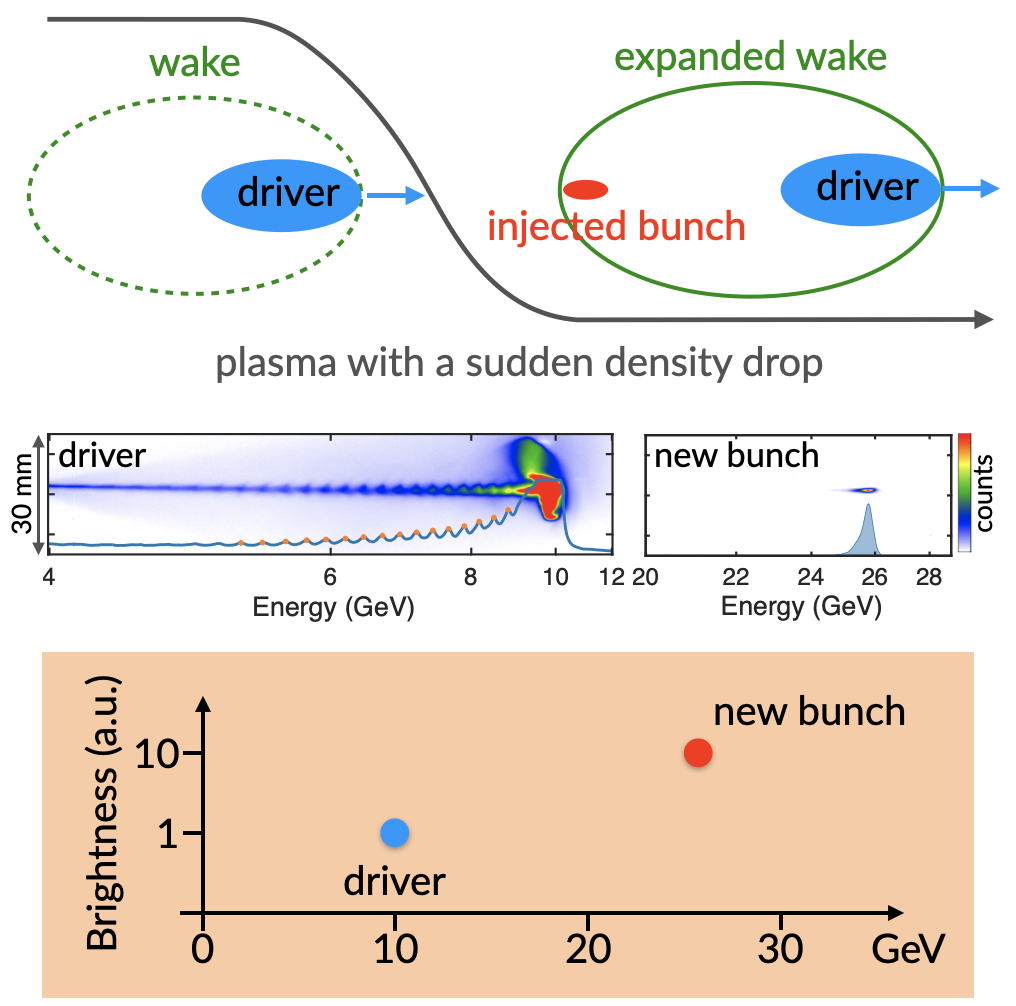
As PI of the E304 experiment at FACET-II, I demonstrated a plasma "dual transformer" that decouples energy gain from quality preservation—converting a low-quality drive beam into a new, ultra-bright beam with 2× higher energy (>20 GeV) and 10× higher brightness. This approach achieves sub-0.5% energy spread while maintaining the extreme brightness needed for X-ray free-electron lasers, and enables novel staging architectures that could bypass the quality-preservation challenge plaguing conventional multi-stage designs. This work establishes a viable pathway toward compact plasma-driven light sources and TeV-scale colliders. Published in Nature Communications (2025).
AI/ML-Driven Virtual Diagnostics
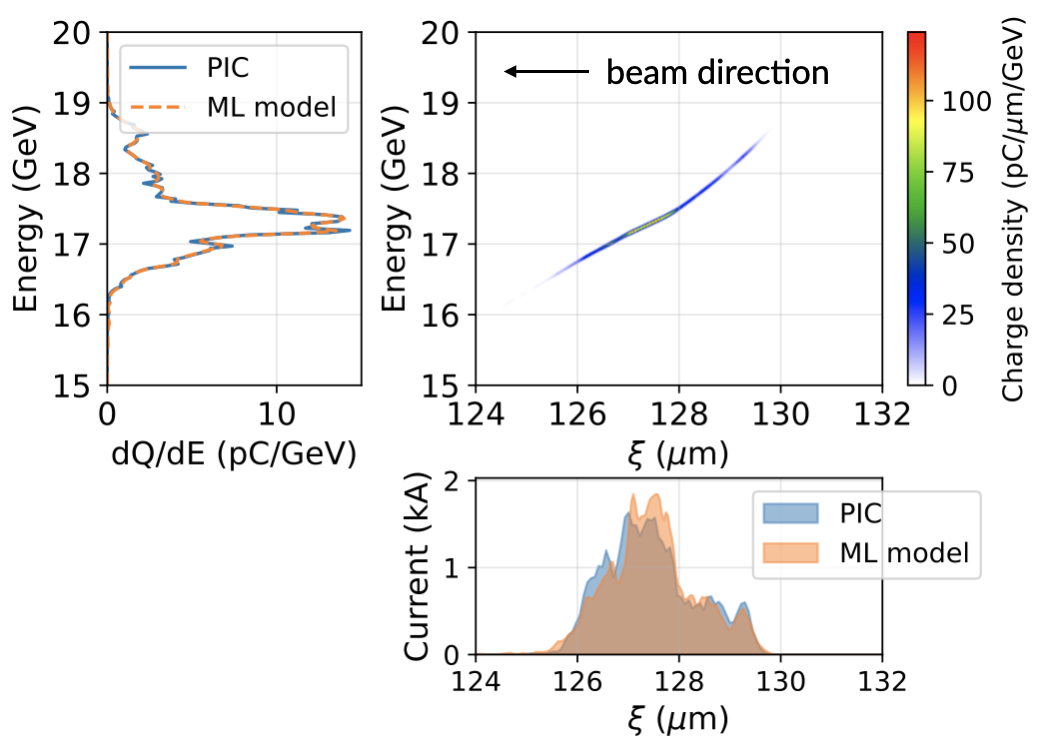
I developed physics-informed "virtual diagnostics" that use machine learning to reconstruct the longitudinal phase space of femtosecond electron bunches from plasma wakefield accelerators—information impossible to measure directly. By combining physical constraints from nonlinear plasma wakefield theory and efficient optimization, this approach extracts complete longitudinal phase space information from limited diagnostic data (e.g., energy spectrum). This ML-driven technique was critical to analyzing E304 results and is now being adopted by collaborators in other PWFA experiments. Beyond diagnostics, this approach opens the door to ML-enabled optimization and autonomous control of plasma accelerators, enabling the generation of beams with designed properties. Published in Nature Communications (2025).
Femtosecond Relativistic Electron Probing (FREP)
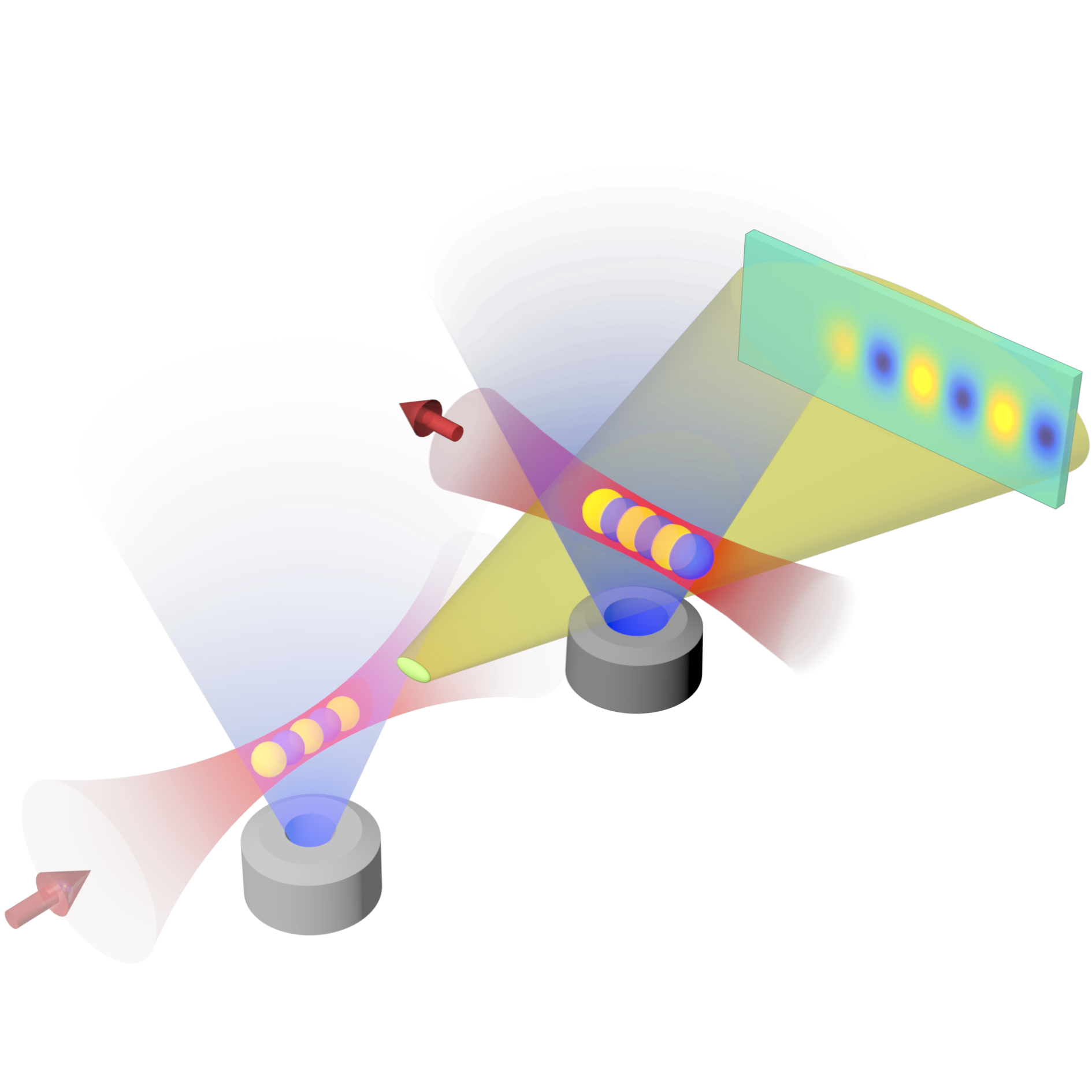
I invented FREP during my Ph.D., using ultrashort relativistic electron bunches from a laser wakefield accelerator to probe plasma wakefields—capturing the first-ever snapshots of these microscopic, transient, near-light-speed structures. The technique works by passing a femtosecond probe beam perpendicular through the wakefield; deflections encode the field structure, creating direct 2D images. This breakthrough enabled the discovery of plasma wake reversal and earned the John Dawson Thesis Prize. FREP has since become an essential diagnostic for understanding beam-plasma dynamics at the frontier of plasma acceleration. Published in PRL (2017, Editors' Suggestions).
Probing the Hierarchy of Kinetic Instabilities
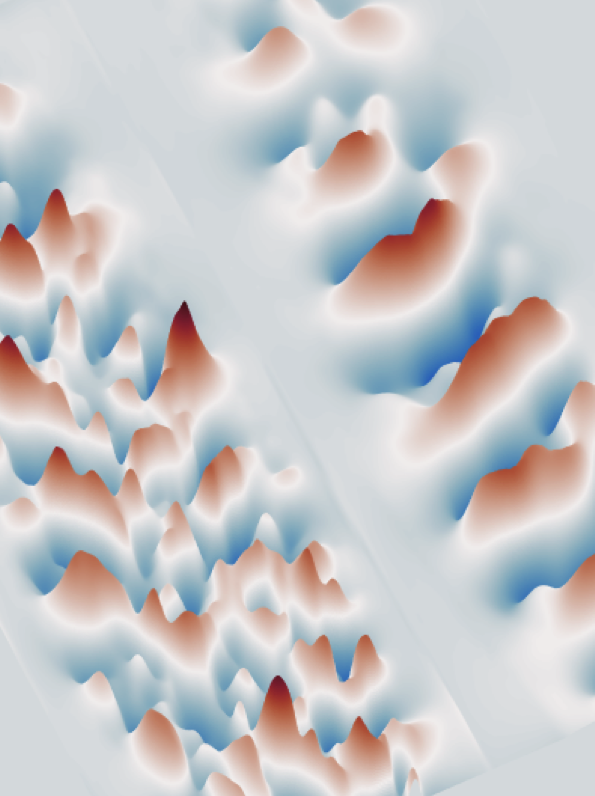
As PI of the AE98 experiment at BNL, I led the first direct measurement of the thermal Weibel instability—a fundamental kinetic instability predicted decades ago but with no conclusive experimental validations in laboraotries. Extending the FREP concept but using picosecond-long electron probes from linear accelerators, we mapped the self-generated magnetic fields in laser-ionized plasmas, revealing the growth and saturation of this instability. This work bridges laboratory and astrophysical plasma physics, validating theoretical predictions about processes occurring in cosmic magnetic field generation and gamma-ray bursts. Published in PNAS (2022, highlighted by DOE) and PRL (2020).
Let’s Connect
I’m always interested in collaborating with researchers who have creative ideas at the intersection of accelerator physics, plasma science, and advanced diagnostics. If you’d like to discuss potential collaborations or research opportunities, please reach out at chaojiez@ucla.edu.